Colorbond, timber, gates, boundary fences and repairs. Measured and built by the same person, with the old fence taken away.
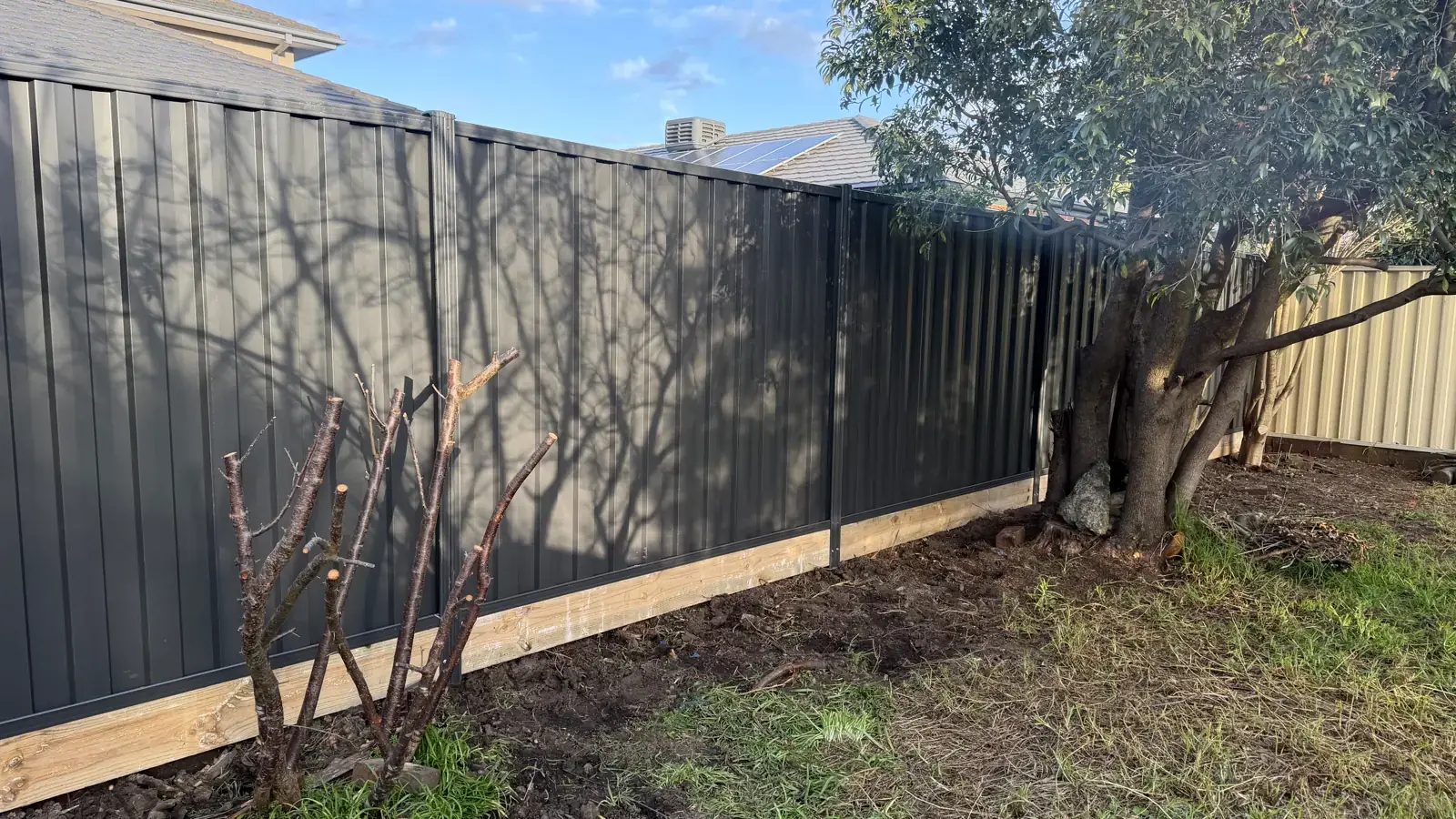
Colorbond is the most common boundary fence in Melbourne for a reason. It’s steel, so it won’t rot, split or get eaten by termites, and it only needs a hose down now and then. It also blocks sightlines and cuts some road noise.
We use genuine Colorbond steel panels and posts, set in concrete. On sloping blocks we step or rake the panels so there are no gaps underneath.
Full-height panels, usually 1.8 metres, in the colour you pick.
Adds extra height and privacy while letting some light and air through.
A finer profile or a different look for front fences and feature sections.
A different colour each side, if you and your neighbour agree.
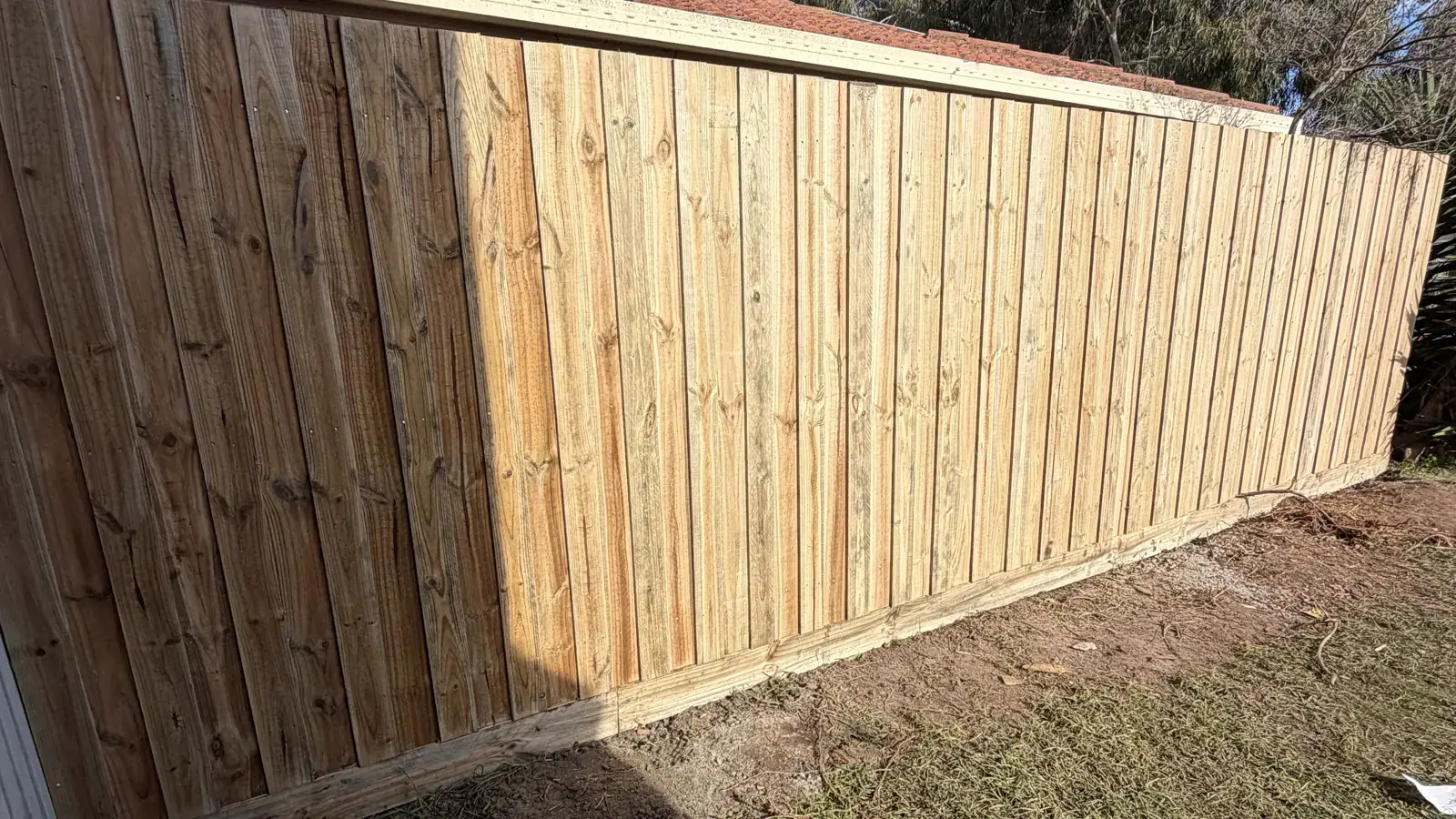
Timber still looks the warmest, and a single broken board is easy to swap out. Every timber fence we build has posts concreted in, rails fixed properly and a capping rail on top to protect the palings from weather.
The classic Melbourne backyard fence. Lapped and capped for better privacy.
Merbau or Spotted Gum. Heavier, longer-lasting, and good for front fences.
Low front fences that suit older weatherboards and period homes.
Horizontal or vertical slats for modern homes, courtyards and side boundaries.
Timber needs an oil or stain every couple of years to stay looking good. We can do that too, see staining and painting.
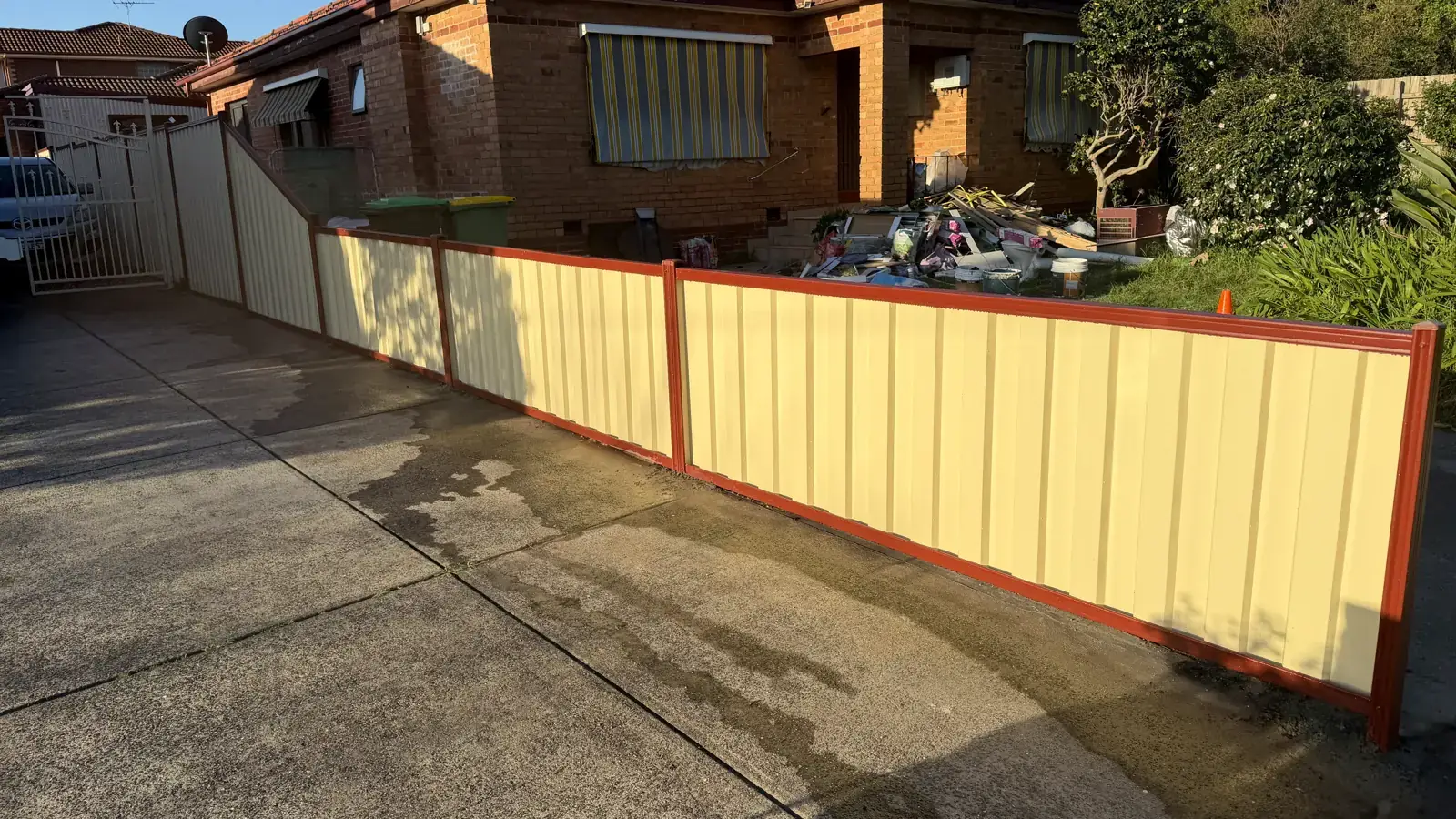
Gates get used every day, so they’re built heavier than the fence around them: stronger posts, proper hinges and a latch that still lines up a year later.
Side and front gates in timber or Colorbond to match the fence.
Swing or sliding gates wide enough for cars and trailers.
Gate motors with remotes. Any hard-wired power is done by a licensed electrician.
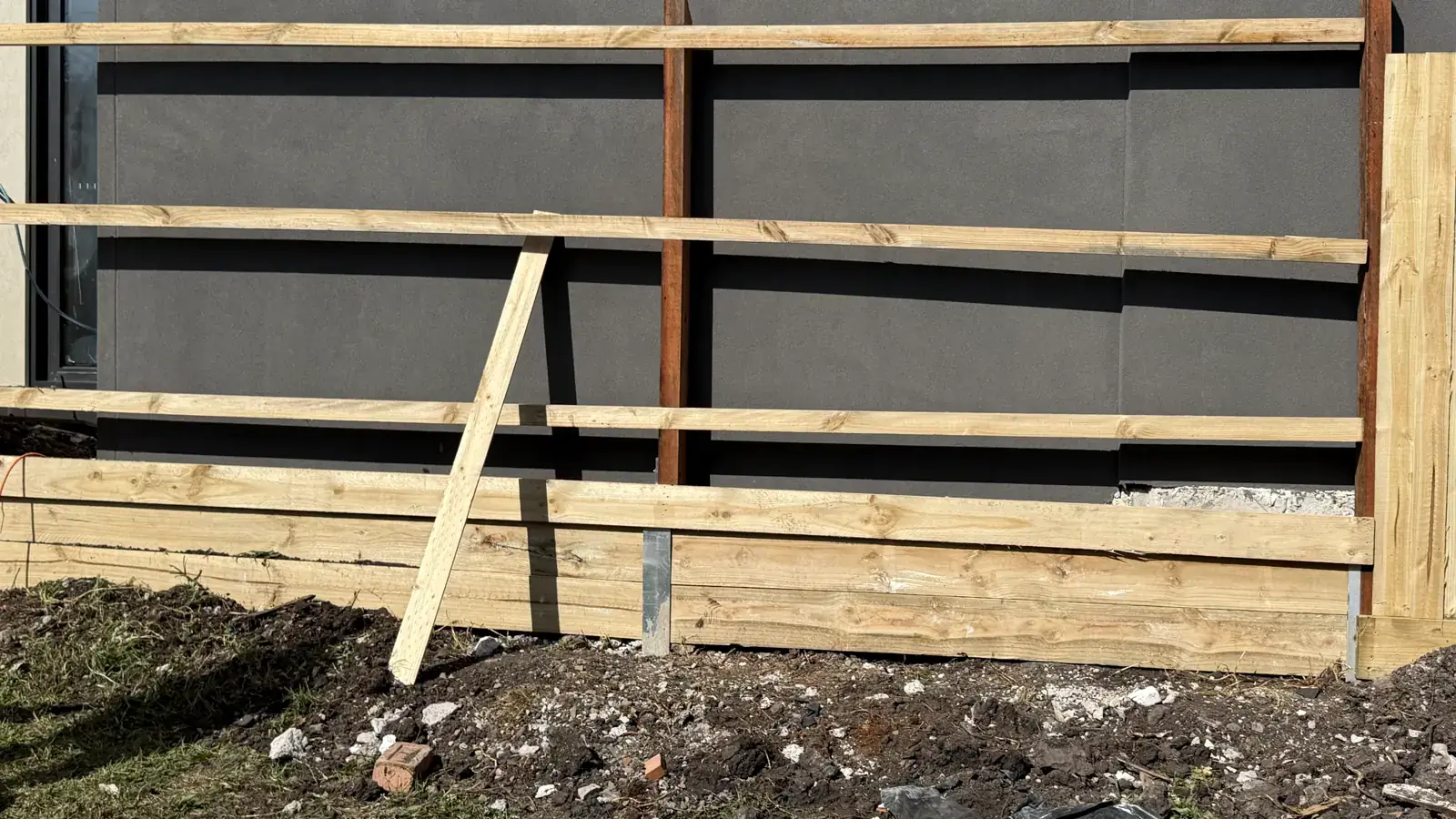
A full boundary job means the old fence comes out, new posts go in along the correct line, and the new fence goes up. On sloping blocks we often need a retaining wall along the boundary first, then a fence on or beside it.
Retaining walls over 1 metre usually need an engineer’s design and a building permit in Victoria. We’ll tell you at the quote if yours is likely to need one.
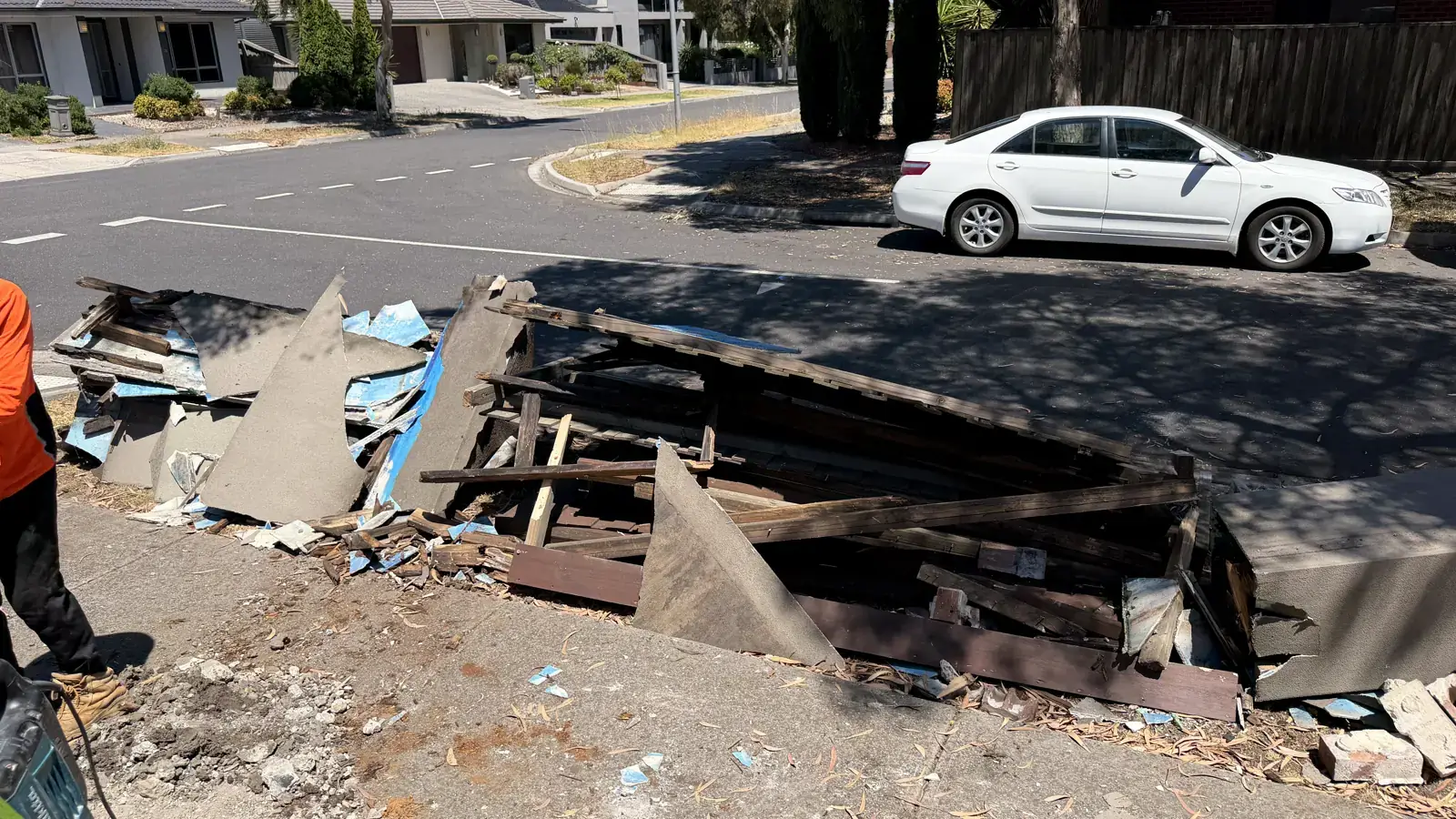
Broken palings, snapped rails and dented Colorbond panels replaced.
Rotted or leaning posts dug out and replaced with new ones set in concrete.
Oiling, staining or painting timber fences to protect them and freshen them up.
Pulled out, footings dug up and everything taken away.
Most fences we build sit on a boundary, so there’s usually a neighbour involved. In Victoria, the Fences Act 1968 generally says neighbours share the cost of a basic dividing fence. The process starts with a fencing notice from one owner to the other.
We’re happy to quote you and your neighbour together, so you’re both looking at the same price and the same plan. This is general information, not legal advice. For disputes, the Dispute Settlement Centre of Victoria can help.
Standard backyard fences up to 2 metres usually don’t need a building permit. Front fences, corner blocks, heritage overlays and retaining walls often do. Your council has the final word, and we’ll flag it early if we think it applies.
Usually not for a standard backyard boundary fence up to 2 metres. Front fences, fences near street corners, fences on heritage properties and retaining walls over 1 metre often have extra rules. We check with you before we start, and your local council has the final say.
Colorbond is low maintenance and won't rot or get termites. Timber is warmer to look at, easier to repair one board at a time and usually cheaper up front, but needs oiling or staining to last. For boundaries most people go Colorbond, for front fences many go timber.
Yes. A Colorbond fence can have a different colour on each side if you and your neighbour agree, and timber fences can be built with the good side facing whoever the agreement says.
We look up underground services through Before You Dig Australia before we dig post holes, so we know what's there before the auger goes in.
Yes. We replace broken palings, snapped rails and leaning posts without rebuilding the whole fence, and we'll tell you honestly if the rest is close to the end of its life.
Tap a colour to see it on a fence. Showing: Monument
Screen colours are close, not exact. We bring real Colorbond samples to your quote so you can hold them against the house.
Quote me in this colour